

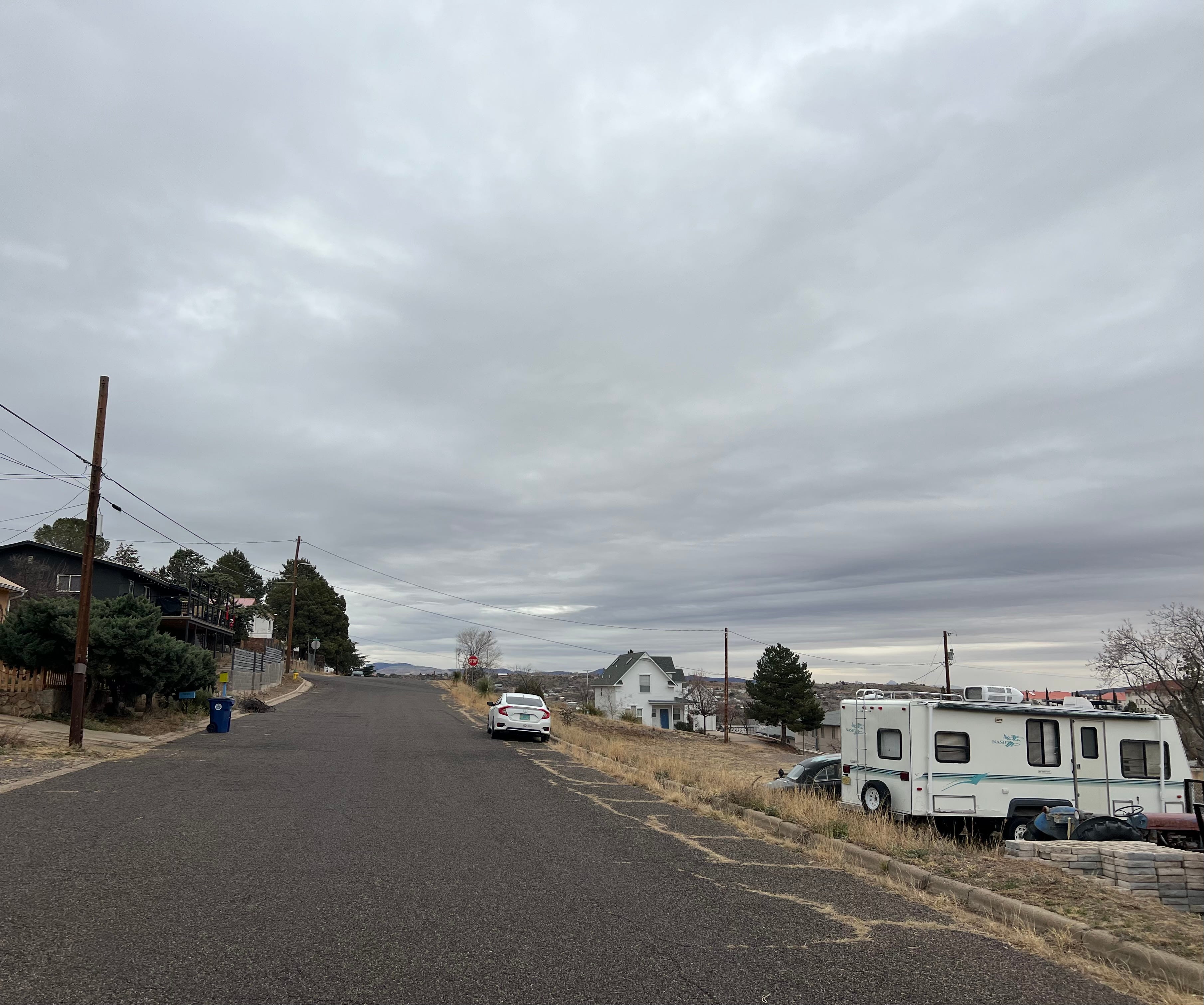
New Year in Silver City, New Mexico. Heavy clouds hang over the town at the edge of the Gila National Forest. The morning is chilly, the air smells of rain. Water drips from the roof over the porch. I don’t mind. December was sunny and this grey overcast reminds me of home. It matches my mood, the feeling of bearing the weight of the world.
My phone knows me, feeds me. I get images of the flattened Gaza, excavators tearing through forests in Indonesia, Chinese fishing fleets emptying the oceans, news of war, cruelty, and environmental destruction. “Everyone knows the list of challenges we are facing,” Chris Bache writes in LSD and the Mind of the Universe. “Subtract a few, add a few; cumulatively, the list is overwhelming.”
I go for a walk in the empty riverbed running through town. Gravel and dry leaves crunch under my sneakers. Who is going to save us from this mess?
“I believe that the problems coming at us are too large to be solved by egoic awareness, even well-intentioned, collectively organized egoic awareness.
The ego of the private self built our divided world and is being consumed by the fires that are consuming this world.” — Christopher Bache, LSD and the Mind of the Universe
Who is going to save us from this mess? The question reflects a comforting assumption: if there is a crisis, a hero will rise to the challenge.
Yet I’ve never felt drawn to superhero stories. To me the world looked strange and messy, a jungle of systems and rules, humans bound by incentives and illusions, lost in the labyrinth, tricked by three devils, bulldozed by history. I felt drawn to stories of those who mastered the game. I fantasized about making a big pile of money and escaping to freedom. Every man for himself. But I’ve watched winners become the system, chained to the game they won a lifetime ago. I’ve watched identities dissolve and merge into our mighty Ouroboros, our machine of self-consumption.
I don’t have the kind of bank account you could build an identity on. While that creates constraints and anxieties, it also offers freedom. Fewer chains to the status quo. Less weight during the jump into the unknown.
In New Mexico I’ve met people who live off the grid, in a trailer on the edge of vast wilderness. They drive into town to get water. Bears stroll across their property. How many egg yolks does it take to prepare a bison hide? How do you turn it into a sleeping bag? I don’t know, but they do. I dip in and out of nature like a skittish deer. I cherish hot water, I write, I trade stocks. I still play the game. I find myself between worlds, unsure of everything. And I have time to wonder.
What if no heroes will show up? Joshua Schrei argued that the quest for collective salvation is too heavy of a burden for any individual. It’s a weight for the gods. The answers to our troubles live on higher planes of consciousness. Maybe any attempt to save the world is a paradox, like trying to lift a boulder and yourself at the same time. What if it’s the wrong question? Does the world need saving?
Let’s say we ruin the planet, turn it into a factory for AI slop, parking lots full of discarded phones, a mute necropolis of the species who used to share it with us. A depressing thought. But didn’t a meteor wipe out the dinosaurs? That wasn’t the end, just a climactic movement in the cosmic cycle of birth and death. A tragedy for team reptile, the seed of triumph for the warm-blooded. Do we have to mess it up for something else to be born?
“There is a structural relationship between the self-interest and shortsightedness that has created this crisis and the nature of the ego itself,” Bache writes. He believes the crisis is inevitable, necessary even. It’s the catalyst to “shatter our psycho-spiritual isolation” and “bring forward an awakening of common ground within us.” It’s not a catastrophe, it’s a threshold, ChatGPT might suggest while we build data-temples the size of Manhattan.
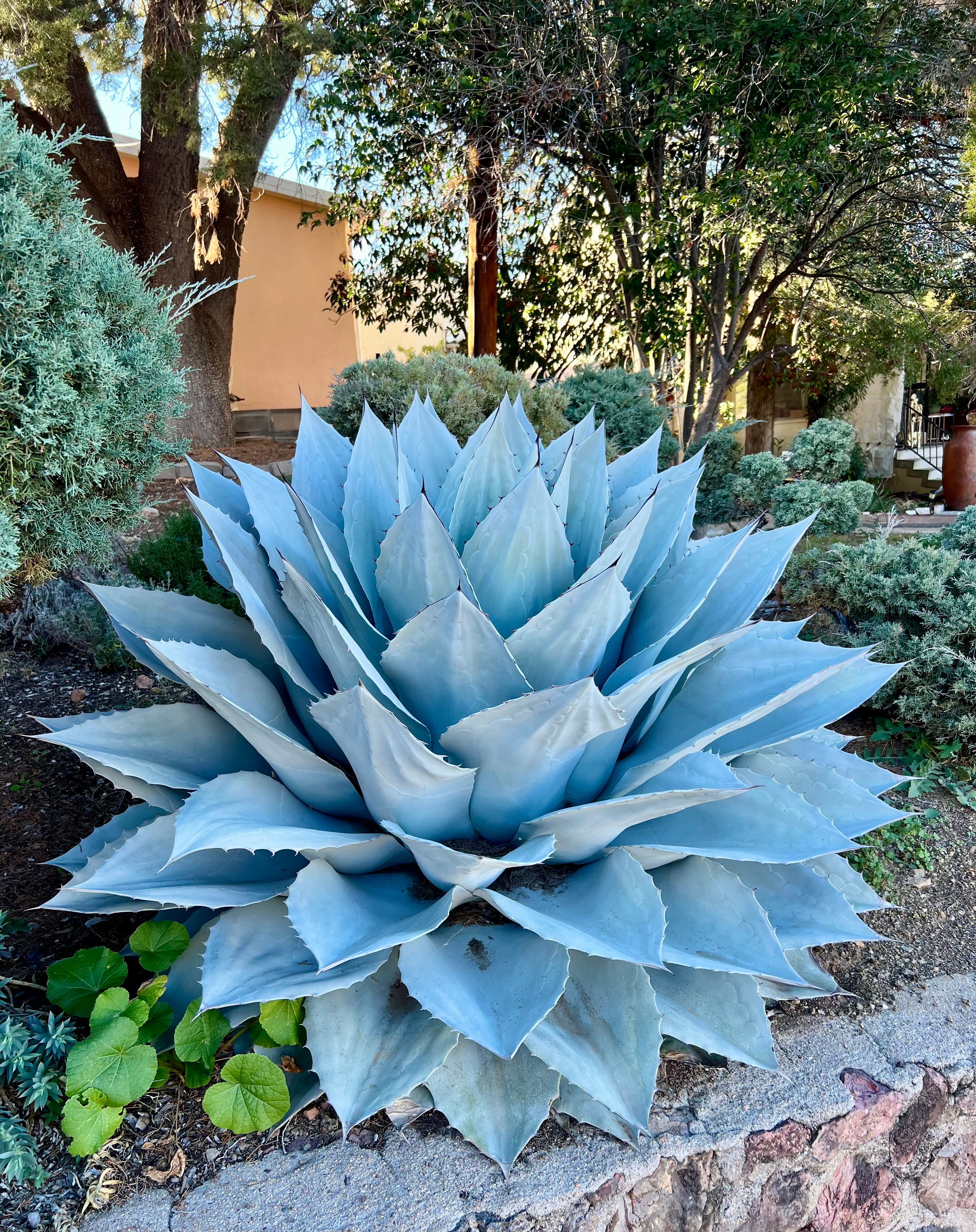
On my walk I pass an agave plant. This is the first time I live in the desert and the landscape still stuns me. Don’t rush past me, it seems to whisper. Look. Nothing has been solved, but my attention shifted. Motion lifted the heaviness, burned through fog like the morning sun. Behind it I find the magic of creation.
“Attention is the beginning of devotion.” as my friend Rohan likes to quote Mary Oliver.
Why does this year feel different? Am I overanalyzing the winter blues? Projecting my pain onto the world? Or is there a heaviness running along the strands of the world soul through every heart?
Part of the answer, I suspect, is that I give myself more permission to feel. I used to close my eyes and ears. I didn’t want to feel my feelings, let alone those of the collective. I felt less pain simply because I felt less. Over the course of years, I cracked open.
I dial into one of Joe Hudson’s free zoom calls and bawl my eyes out in sympathy. It’s the same process nearly every time: someone arrives for a “coaching.” They are wrapped up inside their story, observing from the safety of the intellect. “I think.” Patiently, Joe guides them toward the heart, past the obstructions and blockages, to truths that have been avoided, ignored, judged, and dismissed (a powerful moment I watched live this summer).
Joe taught me that the emotions we avoid run our lives. Maybe that’s what this is about. A lot of thinking to avoid what it feels like being with the world as it is. What if the world does not need saving but loving attention?
Isn’t there a kind of freedom in not being able to fix our crises in our current state of fragmented consciousness? What if instead of scrambling to find The Answer, we become part of the process answering itself? What if before rushing to change things, we re-learn to consciously participate in the cosmic movement?
“The way we get through those super challenging times,” Chris Bache said during a private conversation, “is by affirming the deepest realities of these truths; that our nature is divine and imperishable in essence.” Maybe we can’t save the world, but we can create spaces of connection, healing, and beauty. We can remind each other of our true nature, re-connect with the whole. We can rescue our souls from the glittering maze of sanctified unconsciousness.
What if the more ominous things look, the more we anchor in the heart-field, in gratitude, compassion, generosity, and forgiveness? What if the right actions flow naturally from that place, out of greater awareness, out of the dissolution of old patterns? As within, so without.
That’s not a hero’s journey, but a healing journey. What if nothing more is needed to allow a greater intelligence to do the work through us?
See you down the road.
— Frederik
Frederik, you’ve written so many top-notch essays, and this one is right up there with my favorites. It’s incredibly powerful, maybe because of the times we are living through, but it’s full of ideas and insights worth revisiting with fresh eyes. Thank you for such an incisive and timely piece.
Candidly and sadly, I'm pessimistic. I wrote about this:
"COVID sealed the social contract in amber. For the first time in modern history, a nation declared—explicitly, unequivocally, and without reservation—that the old would be protected at any cost.
Schools closed.
Careers froze.
Dreams deferred.
We inverted the moral hierarchy and tore up the social contract: preservation replaced possibility."
More: https://www.whitenoise.email/p/the-three-gs-of-global-decline-gerontocracy