

I used to rush across the threshold of years, eager to unwrap the gift of fresh beginnings. Big goals and a whole new me. I believed in being busy, too. I don’t have time, I wore that like a badge of honor. Not this year. This January, I paused.
I let myself be suspended in winter’s timeless womb, a formless depth in which I did not have to be someone new just yet. For a moment, I let myself be beyond definition. And I realized why I had shied away from this liminal space. It was more than the nagging voice of guilt, the gnawing sense that I should be moving, should be productive, should show results.
When we let ourselves dissolve, we leave behind our defenses, our excuses and escapes, all those carefully curated distractions. In the void I am alone with all that I am.
I noticed the thorny ranks of my entanglements, my suffocating contradictions. This one above all: that I want to do good but also do well. I feel the shadow of the future, yet I must make a life now, somehow. I have to play the game in front of me, don’t I?
Your old life was a frantic running from silence. — Rumi
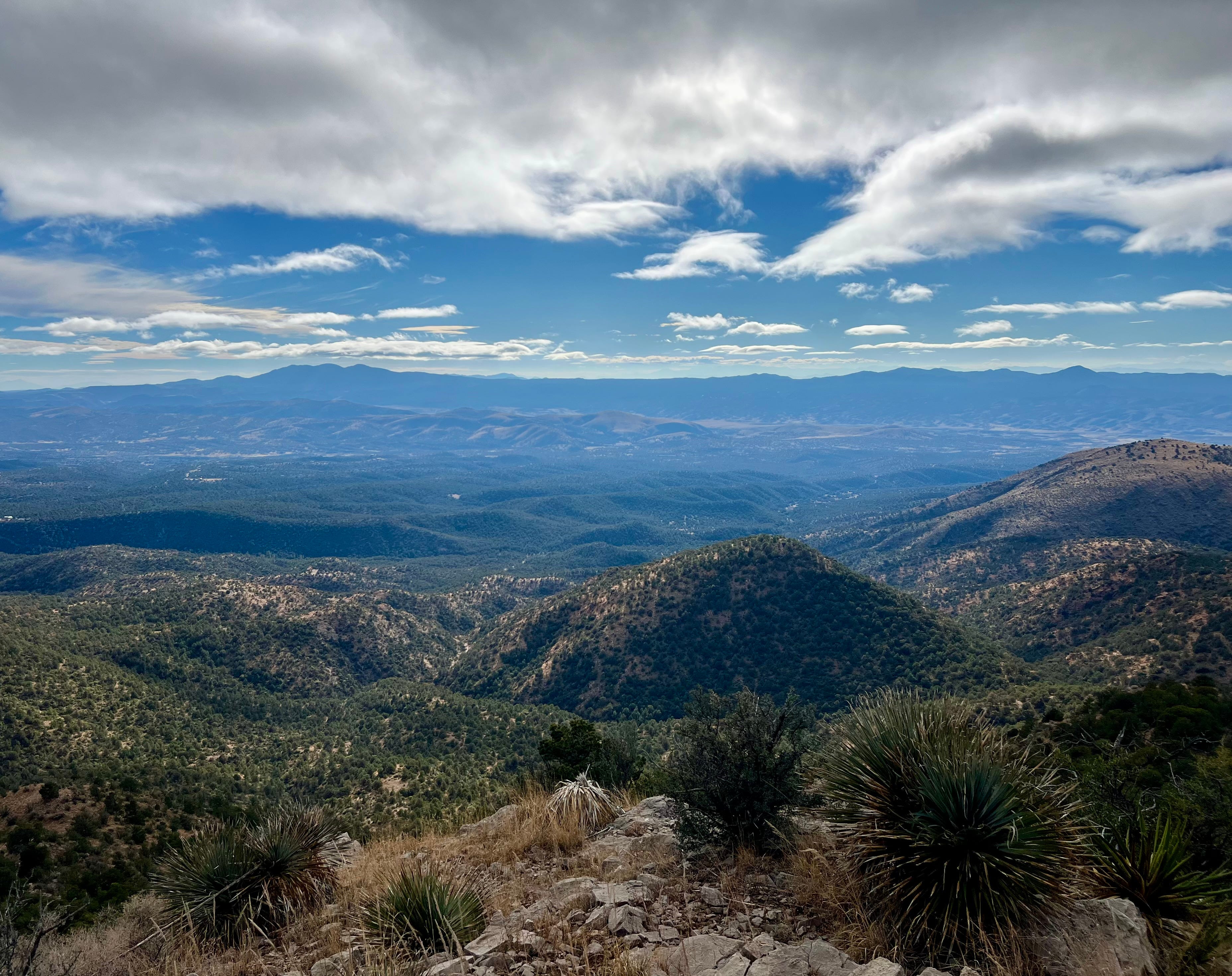
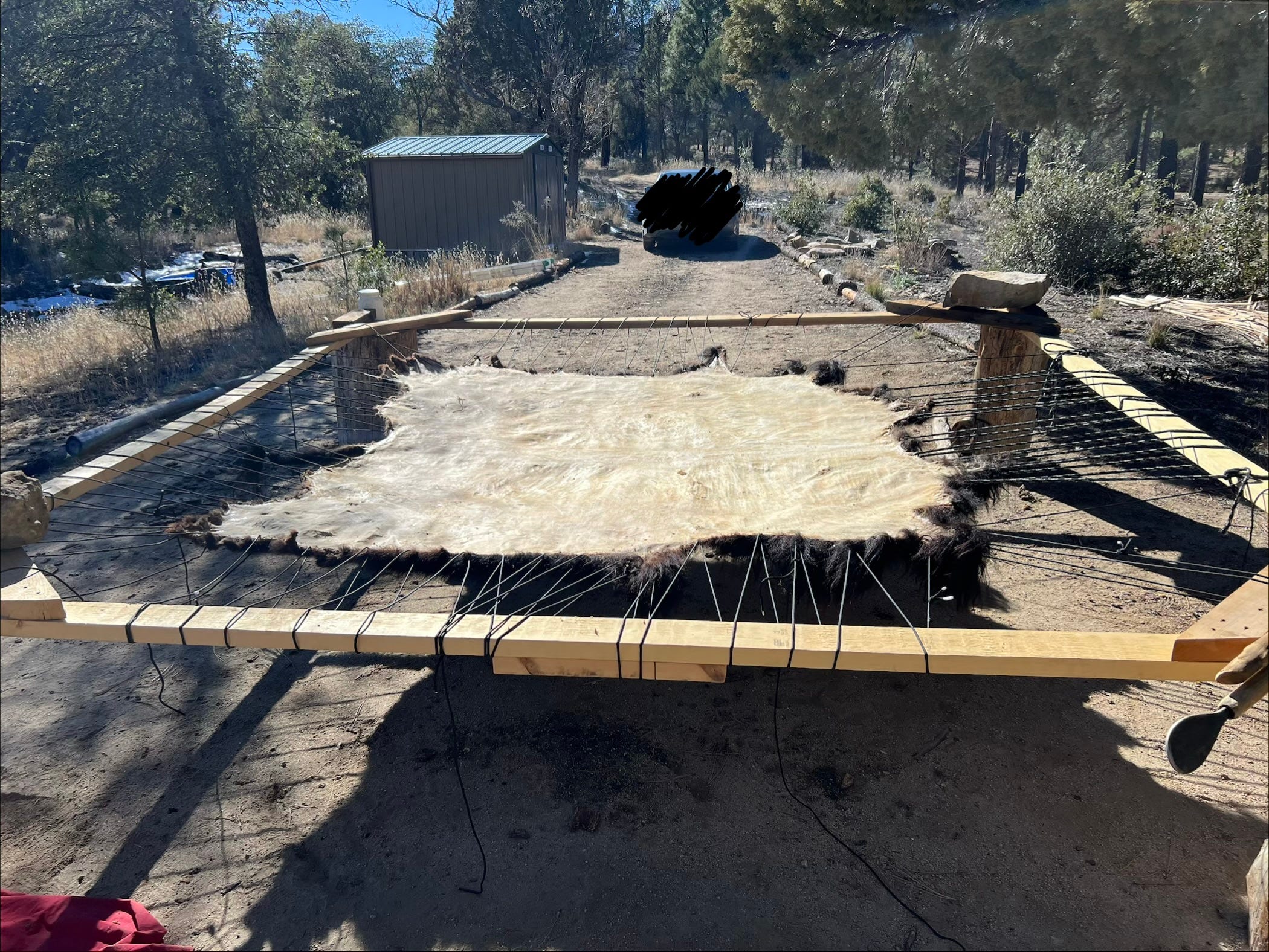
A couple of weeks ago, I visited a friendly couple who live off-grid on the edge of the vast Gila National Forest. The woman was learning new “stone age skills” and I joined to help prepare a bison hide.
Before it could be turned into the world’s coziest sleeping bag, the rawhide had to be softened. It was stretched in a wooden frame, weighed down, scraped, and treated with a softener. Traditional methods include tannin from tree bark and animal brain. My friends worked with egg yolk. I found them crawling on all fours, on the hide, hands and feet smeared in egg slime. I picked up a scraper and helped work the thick hide.
This needs to be done multiple times before the softened hide is smoked and, finally, made into a garment. We’re talking days and days of work. Who has time for that? Not me. I return to my world of books, Substacks, and Zoom calls. I return to my games.
As a teenager, video games were my escape. Even as a depressed financial professional I occasionally binged on bloody battles and fantastic worlds. I haven’t touched them in years, but I still play. When I open my laptop, I check the market. I scan charts, wait for a hunch, for a bet to place.
As an analyst I took investing seriously. Number crunching bored me, yet I was deeply invested in my identity as a professional: hard-working, diligent, thoughtful. I was a walking paradox, a romantic in the spreadsheets. I’ve left all that behind. I’ve lost interest in finding “the truth,” the “true value” of anything behind layers and layers of narrative. For the first time, I move without pretense, almost with ease. Money feels like a game.
Have I turned into a financial nihilist? Is this my cynical embrace of late-stage casino capitalism? Or has this always been my nature? Have I always been a gambler at heart, like so many? Either way, I play. But of course, the market is more than a game. Its chain of red and green numbers wraps itself around the world. Eventually, it reaches all the way back to your front door.
While we scraped the hide, my friends told me that mining prospectors had scouted the hills. Claims had been filed. I learned that National Forest land can be leased for more than cattle grazing and timber. Mining is possible, too.
I’ve seen the scars of extraction on this trip. In Butte, Montana I danced at the folk festival downtown, a stone’s-throw from the mining pit turned toxic lake (infamous for killing snow geese). I am spending my winter in Silver City, New Mexico, another old mining town. On the way here from California I passed a few open pits, greyish blotches dotting Google Maps.
I picture my friends in front of their trailer, among the elk and bears who frequent their property, all of them watching hungry excavators and house-sized trucks rumble down the dirt road. I imagine the hills being carted off to make iPhone ingredients. I hope that won’t happen. Which of course makes me a massive hypocrite.
First, because I am a happy consumer of metals — as are my friends who own phones, laptops, vehicles, and so forth. Nobody wants to see their forest ravaged. But our fingers already dance on the remains of someone else’s pristine wilderness.
Worse, part of me lives in that other world, senses the matrix of money permeating everything. I know why the prospectors showed up. I’ve seen the charts. “To maintain global 3% GDP growth, we have to mine the same amount of copper in the next 18 years as we mined in the last 10,000 years (combined),” mining CEO Robert Friedland explained.
Make no mistake, I’m not saying Capitalism bad! or Mining CEOs evil! They get paid to deliver what we want. Or what we think we want. In any event, what we collectively pay for. With every purchase and every investment, we give our orders.
The machine is hungry and I carry the cursed knowledge that the rational and profitable thing has been to hitch a ride. I watch as my little pile of money turns into a tiny wheel in the bulldozer that transforms the world.
“The first peace, which is the most important, is that which comes within the souls of people when they realize their relationship, their oneness with the universe and all its powers, and when they realize at the center of the universe dwells the Great Spirit, and that its center is really everywhere, it is within each of us.” ― Black Elk
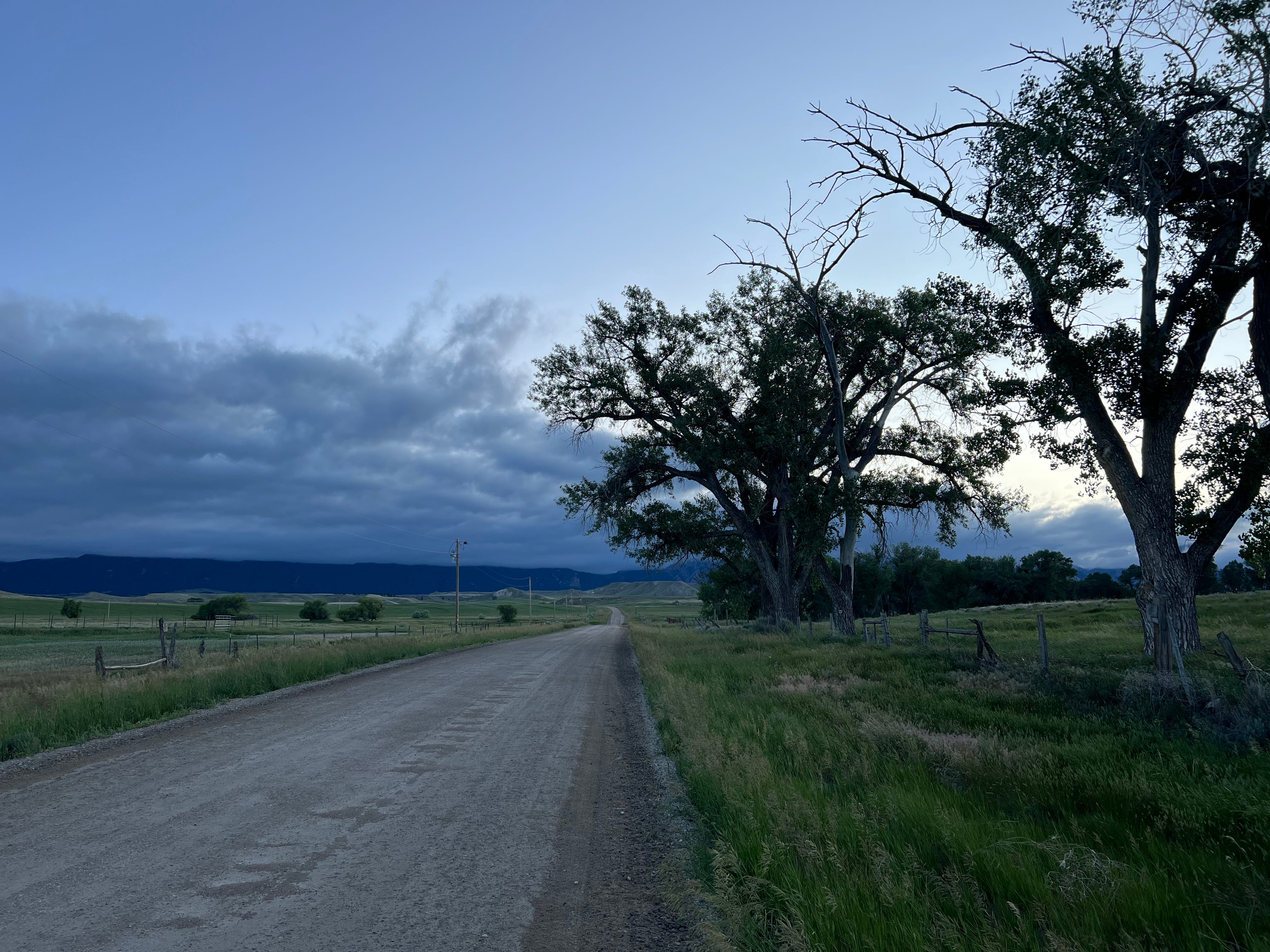
Last June, I spent a week in Sturgis, South Dakota on the edge of the Black Hills. Those hills had been Sioux territory until General Custer found there “much of the yellow metal that makes the Wasichus crazy,” as Lakota holy man Black Elk recalled. “And that is what made the bad trouble.”
The bad trouble: a gold rush that created the infamous town of Deadwood (now a historical downtown and casino). The Sioux were forced to give up their hills. Custer and his men died north of Sheridan, Wyoming where I crossed the gorgeous Bighorn Mountains. It felt to me like South Dakota’s air carried the land’s cursed history.
Half a year later, Black Elk’s words triggered me for I am what he called a “Wasichu,” a white person (possibly derived from greedy or chatty). But I am not crazy for the yellow metal, I object. Don’t lump me in with those people! Then I sit in the stillness of winter and notice.
I don’t take the market as gospel, far from it. But do I not accept it as a truth? Do I not hear the words “a bull market in gold” and consider that a real thing? Am I not paying attention? Do I not care? Does my life not reflect the deeply ingrained belief that the world has a price? If you looked closely, could you not spot a glimmer in my eyes like a gold nugget hiding among the rock?
I wonder how I would feel without the comforting layers of separation. What if instead of pushing a button to buy digital paper, say a gold mining ETF, what if I had to carve the metal out of mother earth myself? What if the button blew up the hill, flattened the trees and exiled the birds, burned the fuzzy squirrelly things that live among the roots? Could I ever look at my wealth without tasting a hint of blood on my tongue?
There’s no reason to feel bad, you might say. If we don’t get the gold out of those hills, somebody else will. What is profitable will be done. The market does not care what I think or whether I passively participate by owning a few shares. I mean no harm, I assure myself, I’m just looking for a fair return. I’m just trying to make a living, buy a house one day. I am not the problem.
I wonder if that’s what Black Elk meant by ‘crazy’. Not just wide-eyed greed and violence, but an entire way of being, a mind that pretends not to be trapped in a story of separation. A mind that presents its perspective as inevitable, irreversible, and superior.
This mind believes in dominion and ownership, not belonging. It sees earth not as home or an organism, but as a collection of ingredients for the value chain. It does not question its right to reshape without restraint. It could never ask a tree for permission before picking a leaf or honor the spirit after a successful hunt. It mocks the ideas of wholeness and harmony for they undermine its identity.
There are certain truths this mind cannot face and occasionally its secret anguish turns into violence against life itself. This mind rules our world. We eat its fruit every day, good and bad, prosperity and sickness.

“Our people knew there was yellow metal in little chunks up there,” Black Elk said, “but they did not bother with it, because it was not good for anything.” We on the other hand can’t imagine letting the gold stay in the hills. Our stories are too powerful, our hunger too vast. If three percent growth requires as much copper as has been surfaced in all history, we ask where to build the mines. This dream of ours may haunt us, yet we dare not wake up.
And that’s why we a-void the void. There, stripped of everything, we dissolve back into primordial unity. Should we be surprised if this communion does not feel like a homecoming, not like the warm womb of the mother goddess, but like bathing in an oily sludge of inconvenient truths?
It’s hard for us to find peace in the void, dangling naked and bare before the cosmic eye. This is a shame because any way forward will arise in that shapeless space, that pause between breaths that births life after life, season after season, world after world.
There we may reclaim our sense of belonging, taste the truth behind the mask of madness. But the gate to this realm is guarded by a thousand unclaimed griefs. “Abandon all hope, ye who enter here.”
“How many events would have to converge to bring us into such a point of radical desperation so that we reach out and are willing to make choices that we’re not willing to make now.” — Chris Bache

Chris Bache called humanity’s present form “transitional,” merely a step on the path to a further evolutionary pivot. “We are cells in a superorganism intent on rapid change.” This development, he believes, will happen under the mounting pressure of global crises.
I think he is right. Every attempt to think our way to a different future seems futile. Life is simply too good to do anything but vaguely dream. As a writer, I would like to face the question. But as a Wasichu, it feels like contemplating the death of who and what I am. My tongue dances with the idea, then it forks. I am hopelessly in and of this world.
It seems to me those with eyes to see and ears to hear are damned to live in tension, torn between the foreboding that this way of life is heading toward its conclusion, yet unable to extricate themselves from the process. “There are no new beginnings until everybody sees that the old ways need to end,” Kae Tempest sings. How long will that take? Years? Decades? Generations? I have no idea, which drives me crazy. In the meantime, we want to thrive and enjoy our precious lives. And we should!
This can be a hard truth to hold. I too enjoyed myself on the march to cataclysm. I too purchased the illusion of absolution with acts of charity and recycling. I too sat on the throne of bones and swiped on my phone. I too accepted the rape of a sacred place as an immutable fact of life.
I dream of the void’s ancient solace. I ache to hear the cosmic hum, the holy OM. But my stillness trembles under distant highways. I taste the ash of a great fire. My ears ring with the high-pitch frequency of the world-wide electric brain. I am a mind-blind Wasichu staggering through the stony desert of my mind. I find no innocence here and no peace, only degrees of connection and complicity.
I know I cannot grasp the whole. The endings I sense are movements that lead to beginnings, cosmic exhalations, waves in a distant shape of mute perfection. I too must ride this breath, be this breath, while I am here.
In the void I feel like that bison hide: suspended and weighed down, scraped, smothered and thinned until I soften, soften, soften.
I yearn to let myself collapse like a star, to sink into the nothingness beyond struggle.
Who has time to prepare a bison hide? People who make time, who care about the experience, who honor the source of their blessings. Also, people who can, who have mostly checked out of the world of clocks and feeds and achievement.
And even they can’t escape. Even they studied the contracts, made sure to buy the mineral rights along with the property. Wouldn’t want to wake up with a drilling rig next to the window one day. Even they pay the global supply chain to deliver solar panels and batteries made with metals minded god-knows-where. Even they live in their entanglement.
Who has time to prepare a bison hide? Not me, staring at my laptop, trying to prove I have something valuable to say. Not me, hoping the market will drop a golden crumb.
I’ve made no life-changing money in gold and silver. Vertical charts make me uneasy. Guess I’m still a chicken, not a born trader. That’s okay. It’s just a game. I like this new ease, but I know moving with the flow can’t be healthy if the flow itself is not. And it often feels like I play for a future that may never come.
Through the open kitchen window, I hear the woodpecker who frequents the trees outside the house. “Theirs is the same religion as ours,” Black Elk said about the birds. And he meant it. He lived it. Not me. I watch from behind the glass. I am divided, as always, between worlds. Part trees, part screens.
— Frederik
“How many events would have to converge to bring us into such a point of radical desperation so that we reach out and are willing to make choices that we’re not willing to make now.” — Chris Bache
Every single time I read your work I am moved. Thank you for sharing your insights with the world.
Love it